
“The future of sovereignty is being decided in your home. And now!”
December 31, 2025
Iran: for my autonomy, it’s now or never
March 3, 2026
Our recommendations in times of geopolitical uncertainty
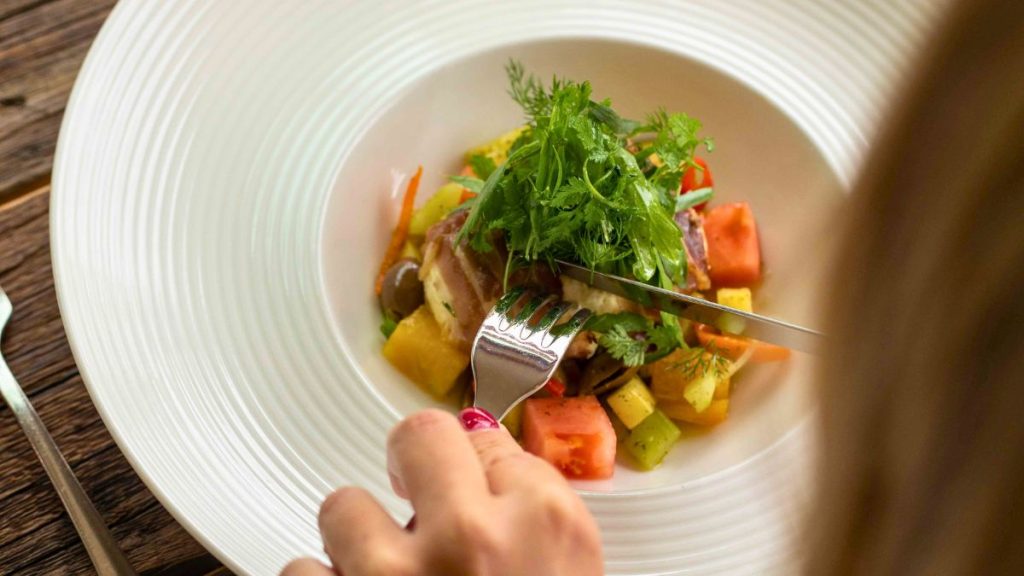
Within just a few days, new geopolitical risks have emerged. Energy policy, international trade agreements, and agricultural policy decisions are increasingly having a direct impact on our food system. What is decided today at the political level will affect tomorrow’s production costs, market prices, and the stability of our food supply.
When the Middle East Crisis Affects Our Shopping Basket
The tensions surrounding Iran and the Strait of Hormuz once again highlight how heavily our economy depends on oil. Roughly one-fifth of the world’s seaborne crude oil is transported through this strategically vital chokepoint (see U.S. Energy Information Administration). Recent reports show that security warnings and military escalation have already led to major disruptions in shipping traffic. CNBC reports that container shipping giants have suspended operations through the strait and rerouted vessels, while The Conversation analyses how even without a formal blockade, rising threat levels are enough to halt tanker traffic. Al Jazeera also details the potential consequences for global oil prices and energy markets.
However, oil is not just fuel for vehicles. It affects transport chains, fertilizer production, agricultural machinery, and the energy supply of greenhouses. As the Center for American Progress highlights, energy costs can account for up to 50% of total variable costs in food production. Rising energy prices thus drive up production costs along the entire food chain — a direct factor behind price volatility and economic uncertainty.
✅ Our advice: Plan strategic reserves of non-perishable foods, secure seeds and above all, plan your greenhouse installation quickly.
EU–Mercosur: A Trade Agreement with Structural Consequences
Beyond the energy question, international trade agreements also affect our food sovereignty. The EU-Mercosur Agreement between the European Union and the South American states of Argentina, Brazil, Paraguay, and Uruguay provides for far-reaching tariff reductions. As the Atlantic Council reports, EU member states voted to approve the deal despite objections from several countries — including France — that raised concerns over its impact on domestic agriculture. Slow Food analyses how the agreement introduces substantial concessions for agricultural imports, raising fears of unfair competition with EU farmers who must comply with more stringent standards.
Especially in times of rising energy and production costs, increased global competition can place an additional burden on regional farms. Food sovereignty therefore does not mean isolation, but rather the ability to maintain relevant production capacities within one’s own economic area.
✅ Our advice: Consciously support regional producers and advocate for fair competitive conditions.
Agricultural Policy Between Competitiveness and Sustainability
In parallel, agricultural policy decisions at the European level are in the spotlight. Debates on pesticides, production standards, and environmental regulations illustrate the tension between economic competitiveness and ecological responsibility. The European Commission’s Vision for Agriculture and Food addresses these challenges, while organizations like PAN Europe continue to push for ambitious pesticide reduction targets.
These regulatory developments influence production costs just as much as market prices — and thus the stability of our food supply.
✅ Our advice: Pay attention to transparent quality and sustainability labels and diversify your sourcing to reduce dependencies.
Growing your own becomes a strategic act.
Energy crises, free trade agreements, national reforms: these dynamics show that our food supply depends on decisions made far from our kitchens. The more globalised the system, the more sensitive it is to external shocks.
In this context, producing part of your own food at home takes on a new dimension. A Myfood greenhouse can produce up to several hundred kilos of fruits and vegetables per year, as well as fish through aquaponics, on an optimised footprint. Based on an average organic fruit and vegetable basket valued between €4 and €6 per kilo, the annual production value can represent several thousand euros. As detailed in our analysis “Making my Myfood greenhouse pay for itself in under 5 years,” the investment can be recouped in less than five years depending on usage, volumes produced, and the trajectory of food prices.
In a context of lasting inflation, this timeline can even shorten: the more prices rise, the more the value of what you produce yourself increases. The greenhouse then becomes not only a tool for food autonomy, but also a tangible form of protection against energy, trade, and regulatory volatility.
In an uncertain world, growing your own food is no longer just a lifestyle choice. It is a resilience strategy.