
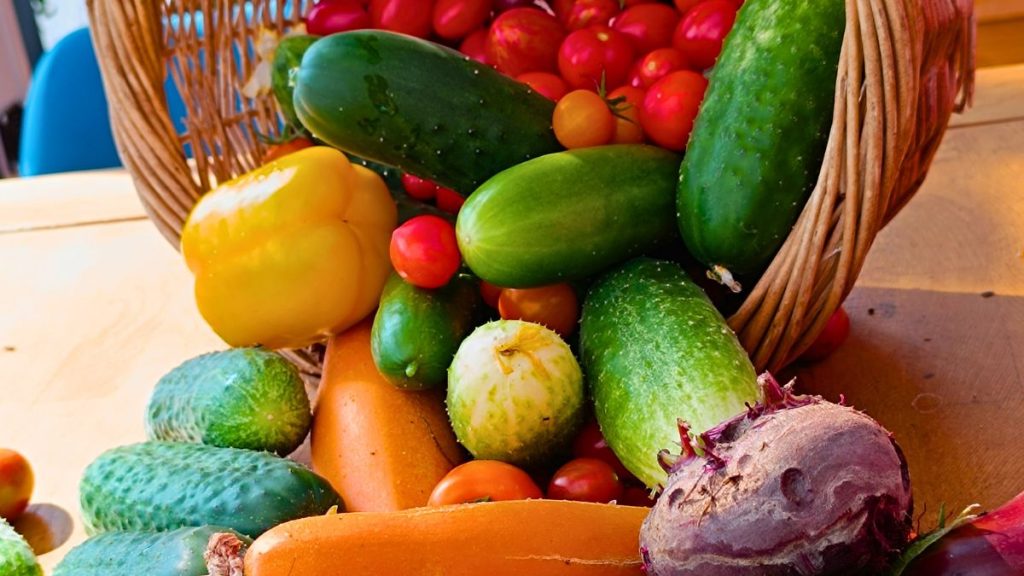
Every summer, it’s the same story. Every summer, the same observation: your basket of fruits and vegetables costs a little more than it did the previous year. Except this time, we have twenty years of data to back it up.
Familles Rurales has just published the 20th edition of its Fruit and Vegetable Price Report. Two decades of price surveys in supermarkets, hypermarkets, discount stores, and organic shops. And a thought-provoking conclusion: the rise in fruit and vegetable prices is no longer a temporary blip caused by a poor harvest. It has become a long-term trend.
This year, vegetables are taking the brunt of it
Let’s start with the good news: fruit prices are stabilizing this year. In fact, organic prices are even falling significantly.
The bad news: vegetable prices are definitely on the rise again. They’ve gone up 10% in a year in conventional farming. And behind that average, some products have skyrocketed:
- Zucchini: +32%
- Vine tomatoes: +31%
- Green beans: +24%
Have you noticed? These are exactly the summer vegetables—the ones you put in ratatouille, a salad, or a Sunday stir-fry. The ones you buy in July and August.
The Observatory attributes this in part to the weather: a turbulent spring in France, unfavorable conditions in Spain and Portugal, and lower available volumes. But the weather doesn’t explain everything, and that’s where it gets interesting.
The Real Issue: Twenty Years of Dropouts
That is the key takeaway from this 20th edition, and it can be broken down into two phases.
Before 2015, prices for fruits and vegetables rose at roughly the same rate as everything else. Sometimes a little more, sometimes a little less, but they followed the same trend as overall inflation.
Since 2015, the trends have diverged significantly. Over the past ten years:
| Increase | |
| Overall inflation (all goods) | +21 % |
| Fresh fruit | +54 % |
| Fresh vegetables | +62 % |
Source: INSEE data cited in the2026 Fruit and Vegetable Price Observatory
To put it simply: fruits and vegetables are getting more expensive two to three times faster than everything else. If you’ve ever wondered why your grocery bill was higher even though you didn’t put more items in your cart, that’s largely why.
And it’s quite a stark paradox when you think about it: the foods that health authorities tell us to eat five times a day are precisely the ones whose prices are skyrocketing the most.
In practical terms, how does that affect your budget?
The Observatory has calculated the costs for a family of four that strictly follows the nutritional guidelines, using the 19 fruits and vegetables in its summer shopping basket.
Between €141 and €265 per month. The first figure reflects systematically searching for the lowest prices, while the second reflects buying only organic products. Depending on the shopping basket, this amounts to between 10% and 18% of the net minimum wage.
One detail that went somewhat unnoticed is nonetheless worth noting. The Observatory points out that the basket consisting of the five least expensive products has risen by 15% in one year—more than the average. In other words: households that were relying on the most affordable products to make ends meet are the ones facing the sharpest price increases. The “I’m being careful” strategy is becoming less and less effective.
Over five years, at this rate, a family spends more than 12,000 euros on fruits and vegetables at the supermarket. Twelve thousand euros gone, with absolutely nothing left to show for it.
Paying more—fine. But what exactly are we paying for?
There’s a second part to this story, and it happened just a few days ago.
On July 20, the National Assembly passed the emergency agricultural law—the one everyone now calls the “Duplomb 2 Law.” The Senate followed suit the next day. The bill once again authorizes, by way of an exemption, two insecticides from the neonicotinoid class that have been banned in France since 2018: acetamiprid and flupyradifurone.
We had already published an article on the first Duplomb Act last summer. The Constitutional Council had struck down its flagship provision in August 2025. A year later, it is back, rewritten to be legally sound.
So let’s take a look at the crops in question: sugar beets, apples, cherries, and hazelnuts.
Apples and cherries. Two fruits that are included in the basket provided by the Observatoire de Familles Rurales.
For you, the result can be summed up in one sentence: you’re paying more and more for your fruits and vegetables, and you have less and less control over what’s in them. It’s not a choice between price and quality. It’s a double loss.
Let’s be clear: the debate over agriculture is very real, and producers who are struggling to cover their costs are not to blame for this situation—as Familles Rurales makes very clear in its report. The real issue is a system in which consumers always find themselves at the end of the chain, bearing the brunt of decisions made far removed from their dinner plates.
What if you invested that money instead of spending it?
That’s where the reasoning breaks down. Because if prices went up one year only to fall again the next, it would make sense to wait. But that’s not what twenty years of observation show. The trend is lasting. So each year of waiting costs a little more than the previous one.
However, there is one option that inflation cannot affect: producing at home.
Take a look at the list of the biggest price increases in 2026: zucchini, tomatoes, green beans. Add lettuce, bell peppers, eggplant, cucumbers, strawberries, and herbs.
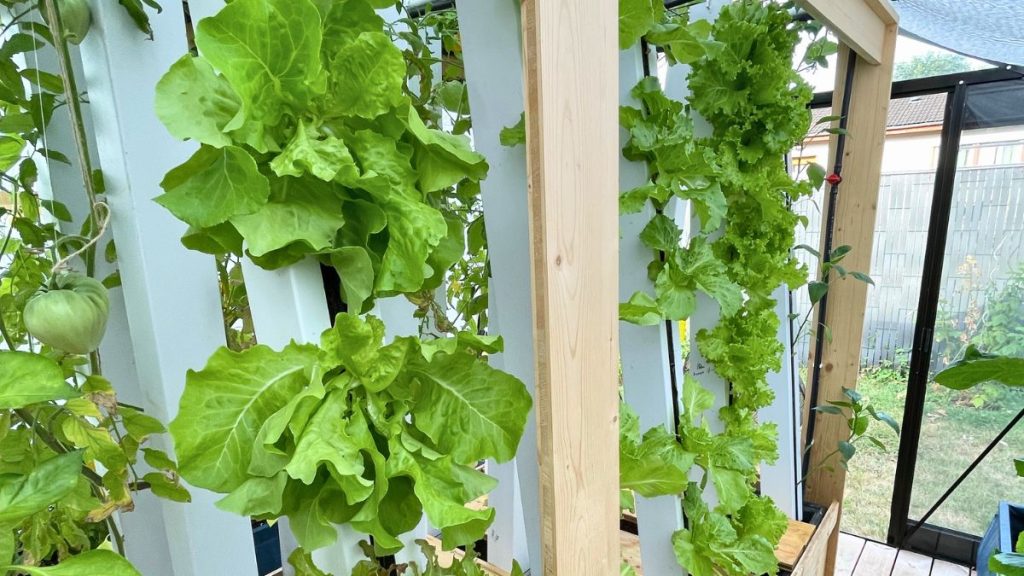
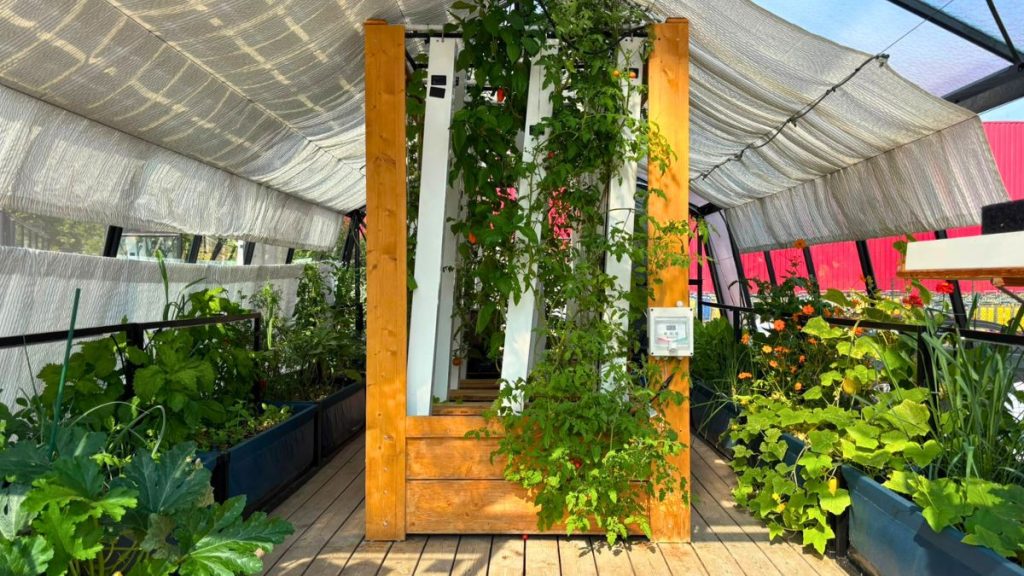
All of this is grown in a Myfood greenhouse. All year round, even in the middle of winter, thanks to vertical growing towers and permaculture containers.
And when it comes to pesticides, the answer is simple: in your greenhouse, you’re the one who decides. No laws, no exemptions, and no disputes between industry sectors have any say in your vertical gardens. You harvest the produce the very same day, just three meters from your kitchen, and you know exactly what’s in it.
This isn’t a political stance; it’s a mathematical equation:
- At the supermarket, you spend about 200€ a month on products whose prices go up every year, and you own nothing.
- Your garden is a one-time investment. A 22 m² Family greenhouse starts at €8,990 (including tax), with modules you can add based on your needs and budget. After that, you’ll only spend a few dozen euros a month on seeds and nutrients—and that cost doesn’t follow the price trends of fresh produce.
We broke down this calculation in our article, “How to Make My Myfood Greenhouse Profitable in Less Than 5 Years.” Based on the Observatory’s 2026 figures, the outlook is even more favorable: the more the cost of groceries rises, the faster the greenhouse pays for itself.
The Difference Between Enduring and Deciding
Familles Rurales is calling on lawmakers to take action, and rightly so: access to healthy food should not depend on income level. We fully support this initiative.
But between the time a law is passed and the time you see its effect at the register, years go by. Years during which the cost of your groceries keeps going up.
Growing some of your own food doesn’t mean cutting yourself off from the world. It simply means deciding to stop being completely dependent on a supply chain over which you have no control. That’s exactly what more than 1,500 pioneers in the Myfood community are already doing, in France and elsewhere.
“The greenhouse is our supermarket right at home.”
The next Observatory report will be released in a year. It will likely say the same thing as the previous twenty. The only real question is where you’ll be at that point: standing in front of a shelf comparing price tags, or in your greenhouse harvesting your tomatoes.