
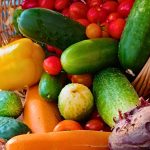
72-hour emergency kits, food stockpiles: governments across Europe and the UK are asking us to store supplies. But a cupboard of tins will never replace real food self-sufficiency, or a source of fresh vegetables.
Monday 2 November, before dawn. In thirteen SuperValu stores across Ireland, fridges and freezers start showing temperatures that make no sense at all. Yoghurts, cheese, meat, bagged salads: everything slowly climbs towards 50 °C.
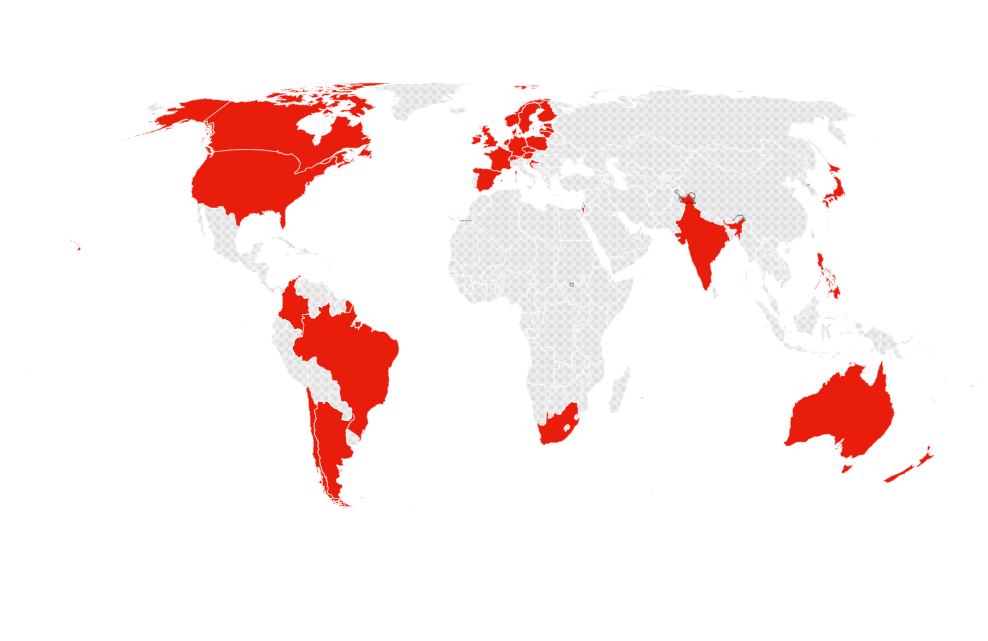
No breakdown. No power cut. Someone has taken remote control of the systems that run the stores’ refrigeration. And Ireland is not alone. The same night, ICA and Coop in Sweden, Delhaize and Carrefour in Belgium, stores in Luxembourg, the Netherlands and Estonia wake up to the same problem. “Overnight, our refrigerators and freezers were hacked, and the temperature was set to 50 degrees,” one Swedish store posted on social media. In Ireland, managers pulled chilled and frozen stock from the shelves, leaving rows of empty units. It was already the second wave in a matter of weeks: in mid-October, hundreds of supermarkets had been hit.
And the UK? No incident has been reported so far. But according to The Grocer, more than 800 UK supermarket fridges are at heightened risk of hacking.
Two years ago, this would have sounded like the plot of a bad film. Today, it is the news. And it is exactly the kind of situation our governments now want us to prepare for by building up emergency food supplies.
72-hour emergency kit: what governments are recommending
Not long ago, telling someone to stock up on water and tins was enough to get you labelled a prepper. Today, it is governments saying it.
In March 2025, the European Commission set a common goal: every household should be able to manage for at least 72 hours without supplies or public services. Some countries go further: Germany, for example, recommends a ten-day stock.
In the UK, the Cabinet Office launched its “Be Ready” campaign on 22 October, the first stage of a three-year programme. The checklist asks households to be able to cope for around three days without power, water, phone or internet: three litres of bottled water per person per day, tinned food, dried fruit and nuts, a torch, a wind-up radio, cash. “Those who can follow this advice should follow this advice,” said Security Minister Dan Jarvis. The Prime Minister himself set the example on BBC Radio 5 Live: “I do like my beans, so I have plenty of those in the cupboard, and soup.” Within days, beans and soup had sold out at several retailers.
The reasons given are always the same: geopolitical tension, cyberattacks, extreme weather. But the underlying message deserves a closer look. In essence, it says: in a crisis, for the first few days, you are on your own.
Emergency food supplies: the forgotten item is fresh vegetables
Take a close look at the official checklists. Tins, crackers, dried fruit, pasta. Everything that keeps without a fridge. Which makes sense for getting through three difficult days.
But nobody lives on tins for long. And fresh fruit and vegetables are precisely what disappears first when the system seizes up.
Why? Because fresh produce is the most demanding product in the entire chain. It has to be grown, often far away. Transported quickly. Kept cold at every stage. Sold within a few days. Supermarkets run on “just in time”, with very little stock in store. One broken link is all it takes for the shelves to empty.
We have already seen it with energy. The crisis in the Strait of Hormuz has pushed up the cost of fuel, fertiliser and transport, and UK industry voices warned that food prices could rise by more than 10%. Fresh produce is the first thing families cut: according to the Food Foundation, around half of food-insecure UK households have cut back on fruit, and around 40% on vegetables. We wrote about this in Iran: for my autonomy, it’s now or never and What if everything stopped tomorrow?. Now we are seeing it with refrigeration: a few lines of code were enough to turn entire aisles into bins.
Food self-sufficiency: a stockpile runs out, a vegetable garden grows back
Stocking up is good. But it is a stopgap. After three days, ten days, a week, the cupboard is empty and you are back in the same queue, hoping the shelves are full.
That is where the real problem lies. We have handed almost all of our food to a handful of retailers, to lorries crossing Europe and now to computer servers. As long as everything works, it is comfortable. The day something jams, we have no grip on it at all.
Taking back control does not mean building a bunker or turning your back on society. It means producing some of what you eat yourself, especially what is most fragile: fresh food. A row of lettuces does not break down. A tomato plant does not depend on a server in Denmark.
Governments are asking us to hold out for three days. What if we aimed instead to stop depending on the fruit and veg aisle altogether?
Five simple steps towards food self-sufficiency
Self-sufficiency is never about a single lever. Here are a few achievable steps that work well together.
Keep a few hens. Two or three laying hens can cover a family’s egg needs for a good part of the year. They eat your peelings, fertilise the soil and only need a sheltered coop and a small run. One tip: in Great Britain, all poultry keepers must now register their birds, even a small backyard flock, and it is worth checking your local rules or tenancy agreement before you start.
Plant fruit trees. If you have the space, it is the most patient and generous investment there is. And the timing is right: bare-root season runs from November through winter, as long as the ground is not frozen. No large garden? Columnar fruit trees, espaliers or soft fruit (raspberries, redcurrants, blackcurrants, gooseberries) fit in almost anywhere.
Collect rainwater. A water butt connected to a downpipe means free water for the garden, and a reserve that does not depend on the mains when a hosepipe ban comes in over the summer.
Save your own seeds. With open-pollinated varieties, you can harvest your own seeds from one year to the next. A well-chosen seed kit is already a small insurance policy for the seasons ahead.
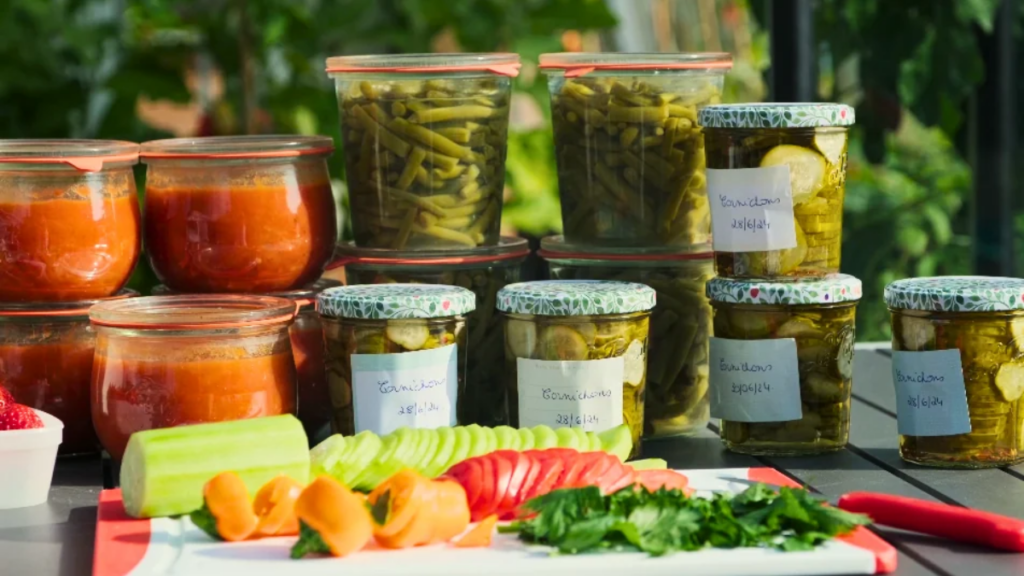
Bring home preserving back. Jams, chutneys, pickles, lacto-fermentation, drying: our grandparents’ skills turn a surplus harvest into a winter store. Your emergency supplies, only homemade.
A bioclimatic greenhouse to grow your own vegetables all year round
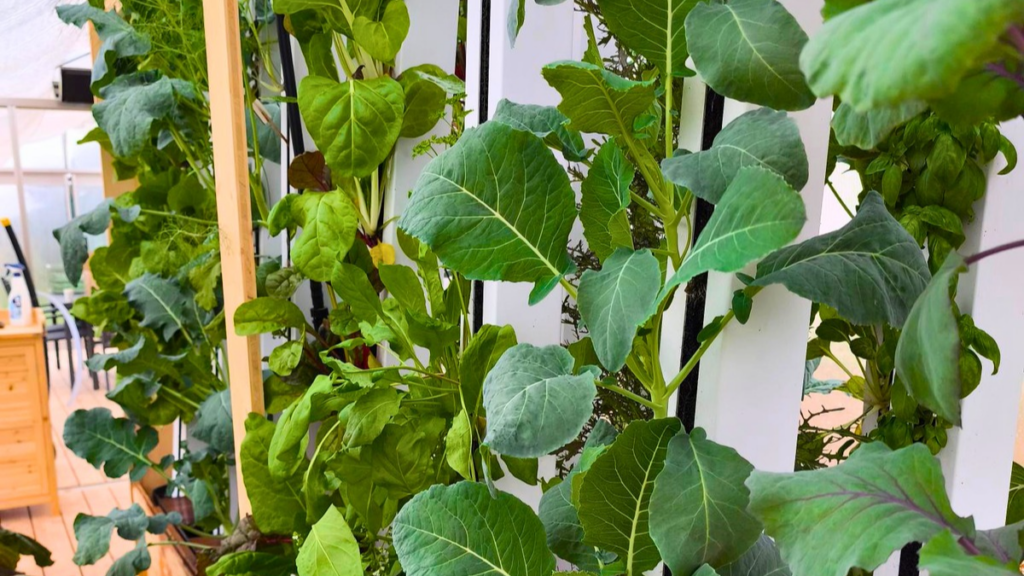
That leaves the cornerstone of food self-sufficiency: growing your own fresh vegetables, all year round. That is exactly what we designed the Myfood greenhouse for.
A bioclimatic greenhouse that produces several hundred kilos of fruit and vegetables a year, even in the depths of winter, thanks to vertical growing towers and permaculture beds. With aquaponics, you can even raise fish. No chiller cabinet, no lorry, no middleman: you pick on the day, a few steps from your kitchen, and you know exactly what is on your plate.
A Family 22 m² greenhouse starts at €7,492 excl. VAT, and we deliver to the UK and Ireland. As we showed in Make my Myfood greenhouse profitable in less than 5 years, the higher fresh food prices climb, the faster it pays for itself. More than 1,500 Pioneers across Europe have already made that choice.
Governments are asking you to hold out for 72 hours. With a Myfood greenhouse, you can aim for the whole year.